
AI & Data Centers: Is There a Solution? The Future of Power
Voxus managing partner Kevin Pedraja connects AI’s appetite for computing power to an aging grid, community resistance and the commercial fusion bet taking shape in eastern Washington.

Hosted by
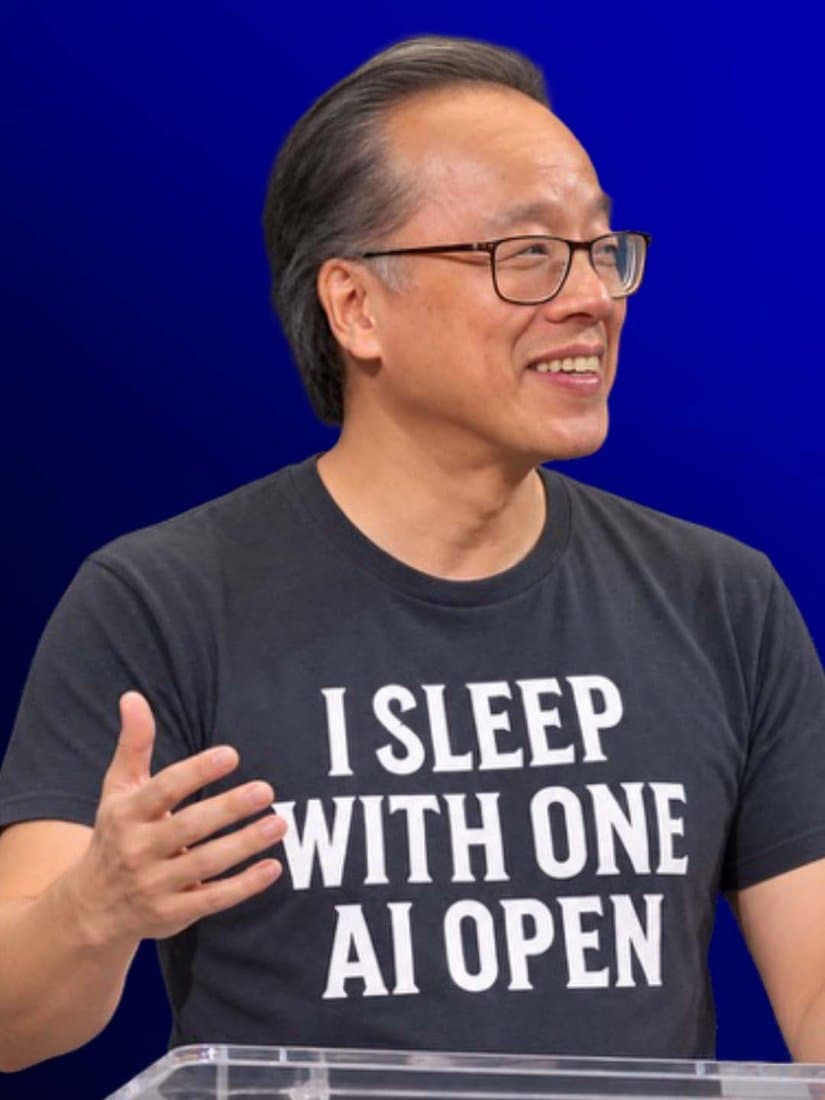
Viet Nguyen & Natalie Chantal Luke
“AI data centers are definitely kind of supercharging that demand, but they’re not the only culprit.”
Kevin Pedraja
The episode
The contest over artificial intelligence is usually narrated through models, chips and talent. Kevin Pedraja argues that the physical constraint is harder to ignore: every denser rack needs more electricity, every new plant needs a grid connection, and every upgrade raises the question of who pays.
Pedraja is a managing partner at Voxus, a technology public-relations firm whose clients span AI infrastructure, energy and deep tech. He brings the perspective of a communicator rather than an engineer, and repeatedly marks the limits of his technical expertise. That distinction matters in a conversation filled with forecasts, project timelines and regulatory claims, so we link to the primary sources below.
The episode moves from AI-assisted communications to data-center demand, grid capacity and a local fusion energy company's plans for a commercial plant in Washington. The most useful conclusion is not that one technology will fix everything. It is that generation, transmission, financing, regulation and public acceptance are one connected system.
Five takeaways
- 01
Pedraja uses AI as a research and revision assistant, not as a substitute for the original idea, editorial judgment or relationships that make communications work.
- 02
Technology companies often describe mechanisms and performance while neglecting the customer’s question: what useful outcome does this produce, at a price the customer can afford?
- 03
Pedraja says AI data centers are accelerating electricity demand, but he rejects the simpler claim that they are the only cause. Electrification, population, cooling and an aging grid are part of the same problem.
- 04
New generation is not enough by itself. Interconnection queues, transmission limits, rate structures and disagreements over who finances upgrades can block power even when a project is technically viable.
- 05
Pedraja presents fusion as a promising clean-energy option, not a settled delivery schedule. Capacity, timing, fuel, safety and regulatory claims about any fusion plant are the developer's own and should be checked against its published plans.
Chapters
- 0:00
Cold open: AI, fusion and the power problem
A preview of the conversation.
- 0:42
From tech PR to the AI infrastructure stack
Pedraja introduces Voxus, its deep-technology clients and the research role AI plays inside the firm.
- 2:33
Augment people or replace them
Why Pedraja thinks companies that help skilled employees work better have learned a different lesson from companies focused on substitution.
- 5:43
Stop selling speeds and feeds
Translating complex technology into an affordable business outcome that a customer can understand.
- 7:42
AI can study the beat, but it cannot cover it
Research assistance, generated pitches, editorial skepticism and the relationships a language model does not possess.
- 11:53
Revolutionary claims meet incremental reality
The dot-com cycle, AI hype and the speed with which yesterday’s breakthrough can become tomorrow’s commodity.
- 13:44
The electricity beneath every model
Power-hungry chips, denser racks, cooling loads and the demand forecasts that Pedraja says the grid cannot absorb unchanged.
- 16:58
Community resistance and the cost question
Pedraja cites paused data-center projects and explains why residents do not want hyperscaler growth added to household utility bills.
- 20:02
The energy portfolio around AI
Fusion, pumped hydro, nuclear uprating and the range of energy clients Pedraja encounters through communications work.
- 23:19
How this fusion approach is supposed to work
A non-engineer’s explanation of plasma, magnetic confinement, direct electricity capture and the limits of simplifying first-of-a-kind technology.
- 25:29
A commercial target, not a guarantee
A local fusion energy company's Microsoft power-purchase agreement, initial operations targeted for 2028 and the difference between a stated plan and delivered commercial power.
- 32:26
Fusion’s different regulatory path
Pedraja describes state and federal oversight and argues that fusion’s safety profile differs materially from conventional fission.
- 34:09
Why the grid may need every available source
Fission, modular reactors, electrification, air conditioning and the scale of demand beyond AI alone.
- 40:51
Who pays for the next grid
Household rates, utility capital constraints, behind-the-meter projects, solar adoption and the burden of infrastructure upgrades.
- 48:48
What abundant clean power could change
Pedraja’s optimistic case for fusion and the economic and climate possibilities he associates with less scarce electricity.
- 58:02
Hiring storytellers for deep tech
Context switching, curiosity, rejection tolerance and the ability to explain a complicated subject without pretending to be its inventor.
Resources
Voxus ↗
The B2B technology public-relations firm where Kevin Pedraja is a managing partner.
Kevin Pedraja on LinkedIn ↗
Kevin’s professional profile.
Kevin Pedraja at Voxus ↗
Kevin’s listing on the Voxus team page.
IEA, Energy and AI ↗
The International Energy Agency forecast behind the data-center demand figure Kevin recalls.
Microsoft’s Community-First AI Infrastructure pledge ↗
Microsoft’s commitment to pay its own way on grid upgrades.
Constellation and Microsoft restart Three Mile Island Unit 1 ↗
The 20-year power purchase agreement Kevin mentions.
NRC on fusion oversight in Agreement States ↗
Why Washington state, not the federal government, licenses fusion machines there.
More from the show
In this episode
- The assistant, not the author. Why Kevin uses AI to research and tighten a draft, but not to write the first one.
- Editors can tell. Why Voxus won't send AI-written pitches, and how AI still helps study a reporter's beat.
- Incremental, not revolutionary. “Technology is more incremental than it is revolutionary,” and why reporters tune out the word.
- Every AI story is an electricity story. Denser racks, cooling and the communities pushing back on new data centers.
- Who pays for the grid. Household rates, Microsoft's pledge to cover its own grid costs and the solar equity problem.
- The fusion bet. How one commercial fusion approach is supposed to work, and why initial operations targeted for 2028 are a target, not a guarantee.
- Hiring storytellers. What Kevin looks for in people who explain deep tech for a living.
Credits
- Hosts: Viet Nguyen and Natalie Luke
- Guest: Kevin Pedraja
- Sound technician: Markus Luke
- Intro song: made with Suno
About Kevin Pedraja
Kevin Pedraja is a managing partner at Voxus, a B2B technology public-relations firm. His work spans companies building the infrastructure, energy systems and software behind modern computing. In this conversation, he uses that communications vantage point to connect AI adoption with the physical systems required to sustain it.
Disclosure: Voxus represents the local fusion energy company discussed in this episode. Kevin spoke from his own experience, not as a spokesperson for any client.
Questions the episode leaves open
- How fast will data-center electricity demand actually grow? The International Energy Agency's base case is roughly 945 terawatt-hours of global data-center use by 2030, a bit more than Japan uses today.
- How many proposed data centers are being blocked or delayed by local opposition, and does that pressure change where and how they get built?
- What will “initial operations” in 2028 mean for Washington's first commercial fusion plant, and when does its agreement require electricity to reach Microsoft?
- Which fusion materials, waste streams and operational risks need more precise explanation than the interview provides?
- What rate structure would prevent grid investment for large data centers from being shifted onto households and smaller businesses?
The guest
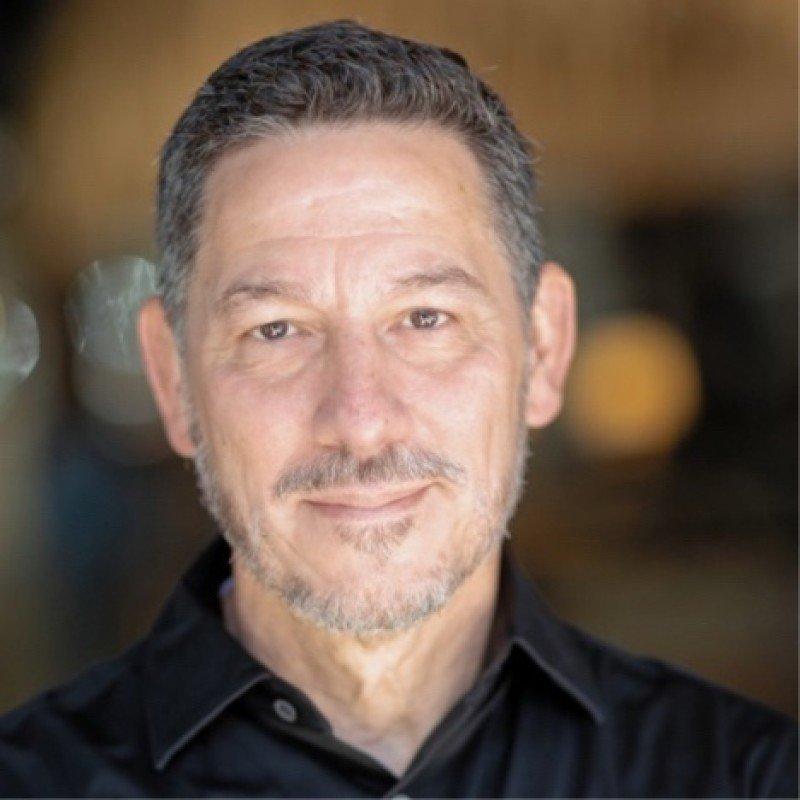
Kevin Pedraja
Managing Partner, Voxus PR
Kevin Pedraja is a Seattle-based technology communications strategist and a managing partner at Voxus PR, a B2B technology public relations firm in the Pacific Northwest. He specializes in translating complex technical work into clear brand stories and in building media and analyst relations programs for technology companies.
At Voxus, he leads visibility programs for companies in artificial intelligence, deep tech, semiconductor design and cloud infrastructure. His work regularly earns national media coverage and helps founders and executives explain where their industries are heading.
Your hosts
Viet Nguyen
Co-host; founder, Third Space Project
Viet is a Seattle technology executive, civic activist and former president of 5G Americas, which he led until the wireless association closed in 2026, after PR leadership roles at Microsoft and T-Mobile. Recently featured in GeekWire, he builds civic AI apps, including Culliton2026.org, which analyzes how Washington Supreme Court candidates might rule on the "millionaires' tax," and the AI system behind CivicTide, which turns Seattle City Hall data into policy briefs. He is a University of Washington alumnus.
More about Viet →Natalie Chantal Luke
Co-host; executive creative director and CMO, iDesign and iDLegal
Natalie is an award-winning executive creative director, entrepreneur and founder of iDesign and iDLegal. She has shaped creative strategy for Microsoft, Google, T-Mobile, Starbucks, Boeing and Alaska Airlines, and her courtroom narratives and visual systems have supported trial teams in cases yielding more than $210 million in verdicts and settlements. She also teaches and consults on practical AI adoption, and brings sharp questions, creative instinct and an executive's perspective to the show.
More about Natalie →Production

Markus Luke
Audio producer
Markus Luke is a Seattle audio engineer and music producer with deep roots in the Pacific Northwest recording scene. He did foundational work at Seattle's historic London Bridge Studio as an assistant engineer, providing musical assistance alongside producers including Rick Parashar, and contributed engineering to major-label records including Long-View's Mercury and Alex Lloyd's self-titled album. He brings decades of tracking, mixing and production experience to Volume Control.
Full transcript
Read the conversation.
Follow Season 1
The useful AI conversation is just getting started.
Subscribe once and new episodes show up as they drop, every two weeks.
Subscribe to Volume ControlKeep going