
AI Lawyers, Judges & Juries: Can AI Advocates Deliver Real Justice?
Trial lawyer David Crump explains how he uses AI to test cases, examine thousands of pages, and manufacture thinking time, while Viet and Natalie press on privacy, bias, accountability, and the judgment no machine can own.
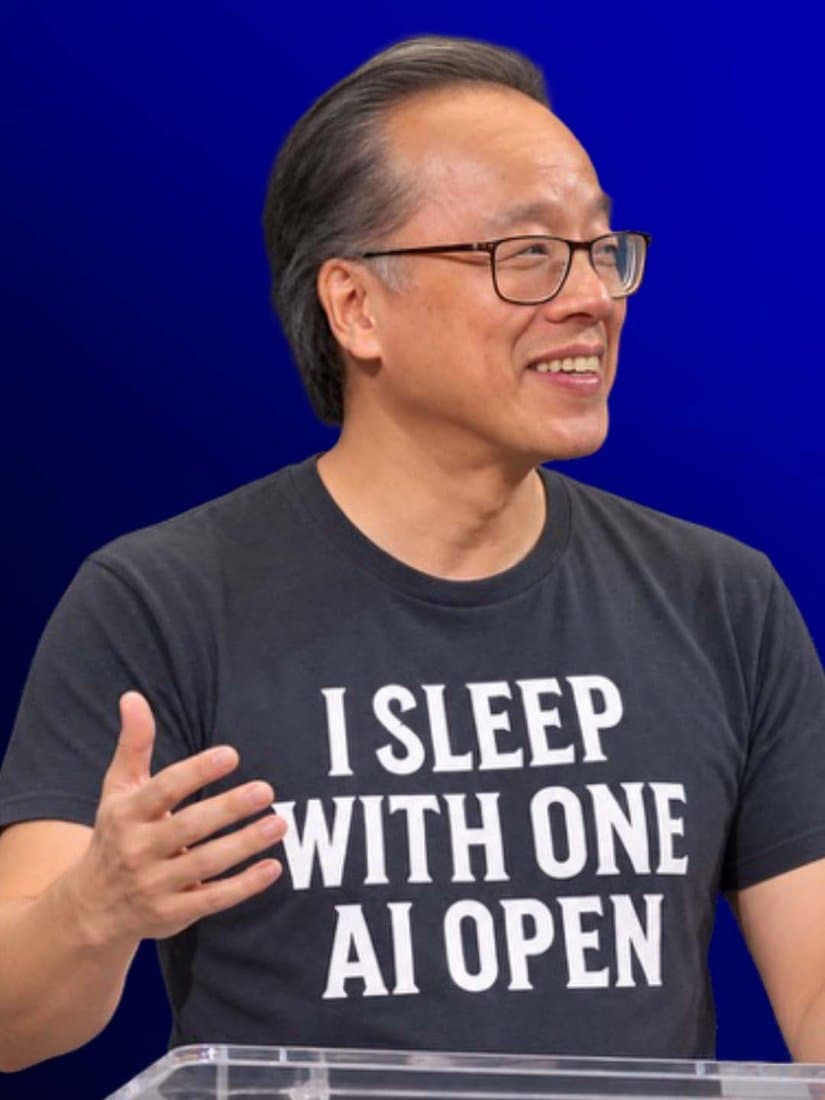
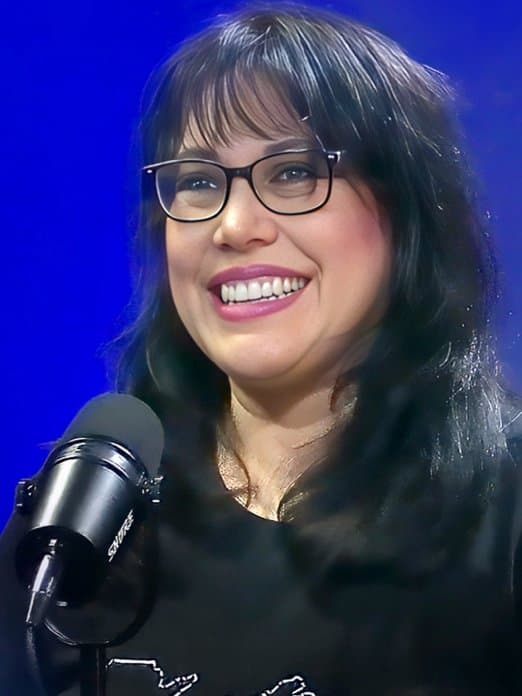
Hosted by
Viet Nguyen & Natalie Chantal Luke
“Now, is it something that I can rely on? No. But what it does do is it spots issues.”
David Crump
The episode
Artificial intelligence is already inside legal work. It can sort medical records, compare theories of a case, draft questions, and let a small firm examine material that once demanded a much larger staff. None of that answers the harder question: when the output is wrong, who owns the harm?
David Crump’s answer is blunt. The lawyer does. In this conversation, the veteran Seattle injury attorney describes client disclosures for AI use, multi-model research, and a simulation that placed 1,200 virtual King County jurors into 100 deliberating groups. He does not treat the results as a verdict. He treats them as a way to find the issue he may have missed.
Viet and Natalie push the experiment toward its limits: professional negligence, confidential information, disappearing legal jobs, biased decision systems, and the possibility of AI arbitration. The useful line is not human versus machine. It is the line between using a system aggressively and pretending it can carry responsibility.
Five takeaways
- 01
AI does not dilute professional responsibility. Crump says a lawyer must supervise its work as rigorously as work produced by a paralegal, assistant, or associate, because the lawyer remains where the buck stops.
- 02
Client consent belongs at the beginning of the workflow. Crump says his fee agreement discloses that case documents may be processed through systems such as ChatGPT or Claude and asks clients to accept the privacy tradeoff.
- 03
Synthetic jurors are an issue-spotting tool, not a substitute verdict. Crump’s 1,200-person simulation helped surface reactions and disagreements, but he explicitly says he cannot rely on it.
- 04
AI can change the economics of legal work by giving small firms faster ways to examine large records, test competing explanations, and create the thinking time that staffing once supplied.
- 05
Crump’s practical rule is symmetrical: turn up experimentation across two or three strong models, and turn down overreliance by checking sources and inspecting attractive answers for hidden errors.
Chapters
- 0:00
Cold open: AI and access to justice
A cold open on access to justice and what AI means for small firms.
- 1:41
Meet David Crump
David’s 42 years in plaintiff’s personal-injury law and his Keenan Trial Institute role.
- 3:42
Inside the Keenan Trial Institute
What the Keenan Trial Institute teaches trial lawyers.
- 4:47
An Early Adopter in the Legal Profession
Why David calls himself an early adopter and wishes he had started sooner.
- 6:42
How Lawyers Are Using AI Today
Client case summaries written by AI, and a fee agreement that discloses AI use.
- 8:19
When AI Mistakes Become Legal Negligence
Sanctions for bad citations, and why the lawyer has to check every case.
- 11:20
Clients Are Already Using AI
Who makes the decisions in a case, and how AI can help people in distress explain what happened.
- 13:44
Should You Ask AI Before Calling a Lawyer?
Using AI to step back from a stressful insurance claim, and what that means for clients.
- 16:35
Will AI Replace Legal Jobs?
David expects changes at every level, from paralegals to senior partners.
- 21:20
Can AI Advocates Deliver Real Justice?
A costly trial that collapsed, and the case for faster systems for small claims.
- 24:21
AI Attorneys, Judges, and Virtual Courtrooms
Natalie presses on spin, persuasion and whether an AI decision maker could decide.
- 29:23
The Future of AI Decision-Making
Confident AI, confidently wrong AI, and the risk of manipulation.
- 31:20
The Future of the Legal Profession
Better information for firms, clients and courts, and what happens to paralegals.
- 36:13
Who Wins When Law Firms Become More Efficient?
More thinking time, and small firms competing with large ones.
- 39:49
AI Expert Witnesses and Case Evaluation
Pulling the few data points that matter to a jury out of huge records.
- 40:46
David's Experiment With 1,200 Virtual Jurors
Simulated King County jurors in 100 groups of 12, and what they revealed.
- 44:48
Who Really Threatens Access to Justice?
Why David doesn’t think AI is the main threat to justice for ordinary people.
- 45:27
Turn It Up: Embracing AI in Law
Use two or three strong models, and push them hard.
- 46:15
How AI Could Change Legal Billing
Agents that run for hours, and the billable-hour traps that follow.
- 47:10
Turn It Down: Overreliance and Final Thoughts
Check your sources, even when AI is summarizing 12,000 pages.
Resources
The Crump Law Firm ↗
David Crump’s Seattle injury-law practice.
Keenan Trial Institute ↗
David’s faculty profile and teaching roles at the trial-training institute.
ChatGPT ↗
One of the AI systems discussed in David’s legal workflow.
Claude ↗
Another AI system David identifies when describing multi-model analysis.
More from the show
In this episode
- AI as your lawyer. Can ChatGPT tell you whether you have a case, and should you believe it?
- AI in the courtroom. How attorneys already use AI to prepare cases, analyze evidence and plan trial strategy.
- The hallucination problem. When fabricated citations and AI mistakes become professional negligence.
- The changing legal profession. What happens to paralegals, junior attorneys and experienced trial lawyers.
- AI judges and advocates. Whether AI attorneys could one day argue before AI judges and virtual juries.
- The fairness question. Can AI remove human bias, or does it bring new problems?
- The virtual jury experiment. What David learned from 1,200 simulated jurors deliberating in 100 groups.
- Access to justice. Whether AI can make legal help faster, cheaper and easier to reach.
- The billable hour. What happens when AI does hours of legal work in minutes.
Credits
- Hosts: Viet Nguyen and Natalie Luke
- Guest: David Crump
- Sound technician: Markus Luke
- Intro song: made with Suno
About David Crump
David Crump is a Seattle injury lawyer who has practiced trial law for 42 years. He is a graduate and Masters graduate of the Keenan Trial Institute and teaches on its faculty, where his public profile identifies him as Dean of Admitted Liability and Co-Dean of Closing-Liability. He also teaches Closing-Damages and is a contributor to Washington State’s Medical Malpractice Deskbook.
Questions the episode leaves open
- What form of disclosure meaningfully informs a client before confidential case material enters a third-party AI system?
- If an automated decision maker produces a harmful result, which person or institution is accountable for it?
- How much can a simulated jury reveal about human reactions before the simulation begins to launder assumptions back to the lawyer who built it?
The guest
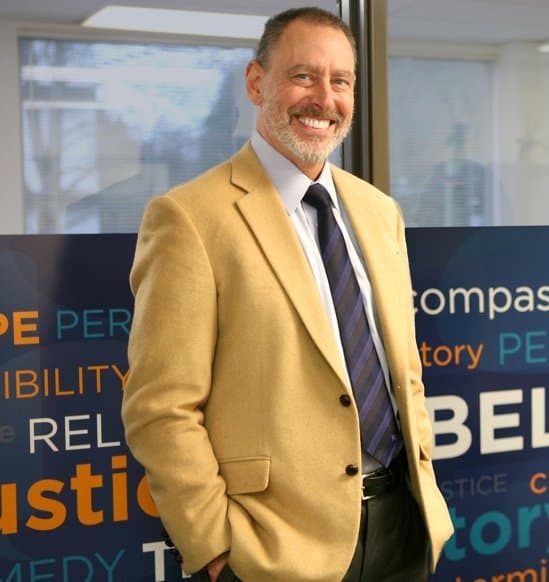
David Crump
Dean, Keenan Trial Institute; plaintiffs attorney, The Crump Law Firm
David Crump is a Seattle personal injury attorney, civic advocate and founder of The Crump Law Firm. In more than 40 years of courtroom work, he has focused on holding people and institutions accountable in medical malpractice, premises liability and tractor-trailer cases.
He is a multi-time Top 100 Trial Lawyer in Washington and an Eagle member of the Washington State Association for Justice. As Dean of the Keenan Trial Institute (KTI), he teaches on the KTI faculty, writes on trial method and appears on the Fridays with Keenan's Cutting Edge podcast, training plaintiff attorneys nationwide.
He is an active member of the Keenan AI group and a former chairman of the board at Seafair.
Your hosts
Viet Nguyen
Co-host; founder, Third Space Project
Viet is a Seattle technology executive, civic activist and former president of 5G Americas, which he led until the wireless association closed in 2026, after PR leadership roles at Microsoft and T-Mobile. Recently featured in GeekWire, he builds civic AI apps, including Culliton2026.org, which analyzes how Washington Supreme Court candidates might rule on the "millionaires' tax," and the AI system behind CivicTide, which turns Seattle City Hall data into policy briefs. He is a University of Washington alumnus.
More about Viet →Natalie Chantal Luke
Co-host; executive creative director and CMO, iDesign and iDLegal
Natalie is an award-winning executive creative director, entrepreneur and founder of iDesign and iDLegal. She has shaped creative strategy for Microsoft, Google, T-Mobile, Starbucks, Boeing and Alaska Airlines, and her courtroom narratives and visual systems have supported trial teams in cases yielding more than $210 million in verdicts and settlements. She also teaches and consults on practical AI adoption, and brings sharp questions, creative instinct and an executive's perspective to the show.
More about Natalie →Production
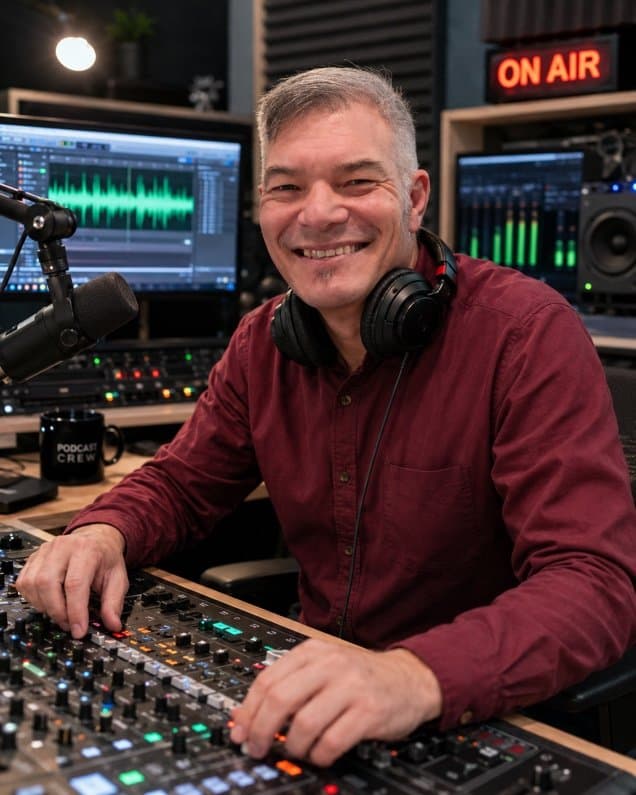
Markus Luke
Audio producer
Markus Luke is a Seattle audio engineer and music producer with deep roots in the Pacific Northwest recording scene. He did foundational work at Seattle's historic London Bridge Studio as an assistant engineer, providing musical assistance alongside producers including Rick Parashar, and contributed engineering to major-label records including Long-View's Mercury and Alex Lloyd's self-titled album. He brings decades of tracking, mixing and production experience to Volume Control.
Full transcript
Read the conversation.
Follow Season 1
The useful AI conversation is just getting started.
Subscribe once and new episodes show up as they drop, every two weeks.
Subscribe to Volume ControlKeep going