

I didn’t set out to start an AI company
Five experiments, a closing trade association and a podcast idea with an old friend became the foundation for 3rd Space Project.
 Viet Nguyen
Two days separated the end of one chapter of my career from the beginning of whatever this one is.
On February 25, Perplexity introduced Computer. On February 27, 5G Americas concluded its operations.
I had spent years helping 5G Americas explain wireless technology, public policy and the long road from research to commercial deployment. I was proud of that work. But when the organization closed, I was also sitting at a very strange intersection. I had decades of experience across technology, communications, politics and policy, and suddenly no institution around me deciding what I should do with it.
Then I stumbled onto Computer.
I had used Perplexity for a while and had been dabbling with different AI products for years. Most were useful in the way a clever new tool is useful. They could answer a question, rewrite a paragraph or create something interesting enough to make you think about what might come next.
Computer felt different. It did not just answer. It could research, build, test, organize and keep working across the steps between an idea and a finished product. It was imperfect, occasionally maddening and absolutely not magic. But for the first time, I could see how one person with judgment, subject knowledge and a willingness to experiment could do work that previously required a small team.
That changed the question from “What can AI generate?” to “What can I build now that I could not have built before?”
I went back to where I started
My career has never fit neatly into one lane. My background runs through political campaigns, public policy, government communications, technology companies and industry advocacy. I have always been interested in the gap between complicated institutions and the people expected to understand what those institutions are doing.
Public information is often technically available but practically unusable. The documents exist, but they are scattered across agency websites. The data is public, but nobody has organized it around the question a citizen is actually asking. The policy debate is loud, but the underlying evidence is buried.
That had always bothered me. Agentic AI suddenly gave me a way to do something about it.
I started building. Not from a master plan, and certainly not from a pitch deck. I chose problems that interested me, gave myself real deadlines and tried to make things that ordinary people could actually use.
Five experiments, one pattern
The first was the Washington Emergency Clause Tracker. Emergency clauses can affect whether a new law is subject to a referendum, but the information needed to understand their use is buried inside hundreds of bills. I wanted to turn that legislative volume into a citizen-level question: which bills use emergency clauses, and what does that mean for voters?
Next came the KCRHA Decision Dashboard. I worked through years of Washington State Auditor reports involving the King County Regional Homelessness Authority and turned them into a decision tool. The point was not to produce another summary of government problems. It was to organize the record around the choices facing the agency’s governing board, including the choices nobody especially wanted to discuss.
The Culliton 2026 project grew directly out of the debate over Washington’s proposed millionaires’ tax. State Supreme Court races rarely receive the same attention as other statewide contests, even when the court may eventually decide the fate of a major tax proposal. I built a voter guide that connected candidate records, campaign-finance data and the legal questions likely to reach the court. It eventually drew coverage from GeekWire, but the more important lesson was that automation and human review could work together on consequential public information. The system could keep the data fresh. I still had to own the judgments.
Not every experiment was political. The Portfolio Analyzer began because I wanted a better way to understand my own investment data. It reads a Fidelity export locally in the browser, without uploading the file, and turns the raw account data into something a person can actually examine. When Fidelity changed a column heading, the tool broke. Fixing it taught me a useful and unglamorous lesson: building the first version is only half the job. Real products have to survive vendor changes, messy inputs and the morning after the demo.
Then came the Washington Accountability Registry. It was an attempt to build something closer to a civic publishing system than a conventional website. Each case needed structured evidence, sourcing standards, a clear status and a way to correct the record. The project forced me to think beyond pages and toward an editorial system that could remain useful as the collection grew.
These were independent projects. Nobody hired me to make them. They did not begin under the 3rd Space name. They were experiments in what one person could do by combining old-fashioned research and judgment with a new kind of technical capacity.
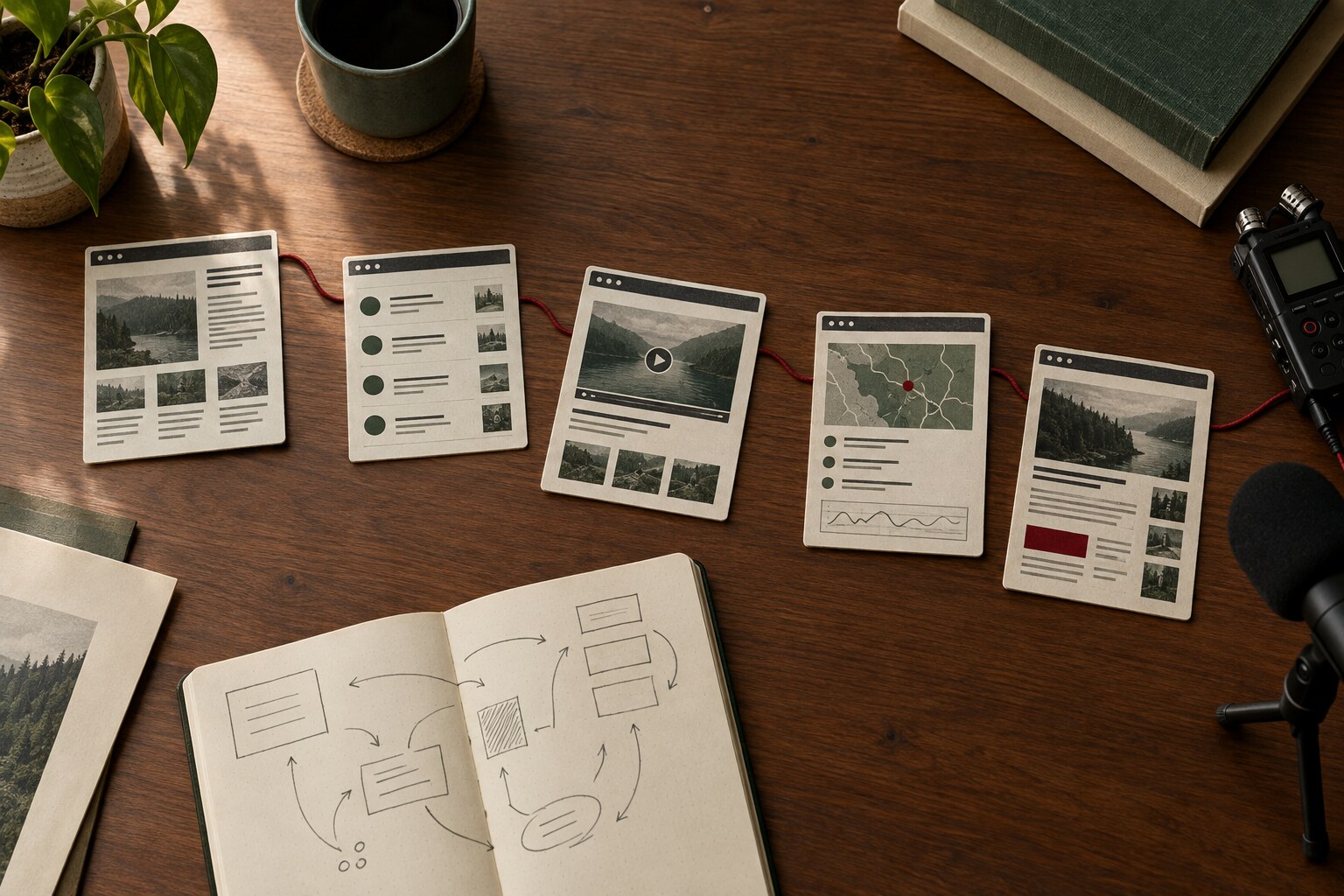
Taken together, they showed me a pattern. The interesting part was not that AI could write copy or generate code. The interesting part was that it could help collapse the distance between research, analysis, software and publication. I could move from a public problem to a working product without handing the idea across five different teams.
That was the opening.
Passion still needs a business model
There was also a less romantic reality. Civic work takes time, and time eventually has to be paid for.
As the millionaires’ tax debate gained steam, I felt more urgency to build tools that could help people understand the policy and legal questions around them. But passion projects are not a business simply because they are worthy or interesting. If I wanted to keep doing this work, I needed a model that could support it.
The answer was not to turn every civic project into a paid product. It was to build a company capable of doing valuable commercial work while preserving room for public-interest experimentation. The same methods behind those early projects could help organizations use AI for research, publishing, internal workflows and decision support. Paid advisory work, workshops and product development could make the broader body of work sustainable.
That idea became one half of 3rd Space Project.
Then Nat showed up
Nat and I are old friends. Around the same time I was building these projects, she was getting fired up about AI too. We kept talking about what was happening, what people were getting wrong and how much of the public conversation was trapped between breathless hype and reflexive panic.
So we talked about doing a podcast.
That conversation mattered because it added something my solo projects did not have. The civic tools were built to help people see public information more clearly. A podcast could help people hear how others were actually navigating the change. It could bring practitioners, skeptics, builders and leaders into the same conversation without pretending anyone had the whole thing figured out.
That idea became Volume Control, and it became the other half of the business.
The company emerged from the marriage of those two ideas: build practical AI systems that help people do real work, and create media that helps the rest of us understand what this technology is doing to our institutions, our businesses and our lives.
Why a third space
The name made sense because the work kept happening between established categories.
It sits between research and execution. Between civic work and commercial work. Between media and consulting. Between human judgment and agentic capacity. It is not a software shop that happens to know public policy, or a communications firm that added AI to a services page. The whole point is to connect those disciplines while remaining responsible for the result.
3rd Space Project did not come from a startup playbook. It came from the end of an organization I cared about, five websites I wanted to exist and a conversation with an old friend about starting a podcast.
The experiments came first. The business was the realization that they belonged together.
That is what we are building now at 3rd Space Project.
Written by

Viet Nguyen
Co-founder, 3rd Space Project
Viet runs advisory at 3rd Space Project and co-hosts Volume Control. Based in Seattle. Writes about what he is seeing across the work.