

Co-founding 3rd Space simply added up for me
My career has always lived where creative judgment, technology and storytelling overlap. AI made the value of that intersection impossible to ignore.

First space: human judgment, voice and perspective
Second space: AI, data, tools and application
Third space: what happens when those things are deliberately brought together
As an early adopter with a heavy background in computers, you would have thought I would be the first in my marriage to adopt AI. Actually, my husband was.
He asked, “Have you tried this ChatGPT thing?”
I told him it was more of a toy than a usable tool. It was the beginning of the mass-market LLM moment, when AI was unreliable and image generators were producing five fingers at best. It was the Chihuahua-or-muffin era.
But I gave it a whirl. As a creative, I was not satisfied with merely asking it questions. I wanted to push image generation and see what kind of visual results I could produce. My first attempt was to turn myself into a character, then turn all my friends into characters. It started as a game and a creative laugh. I quickly realized what this could mean for my work.
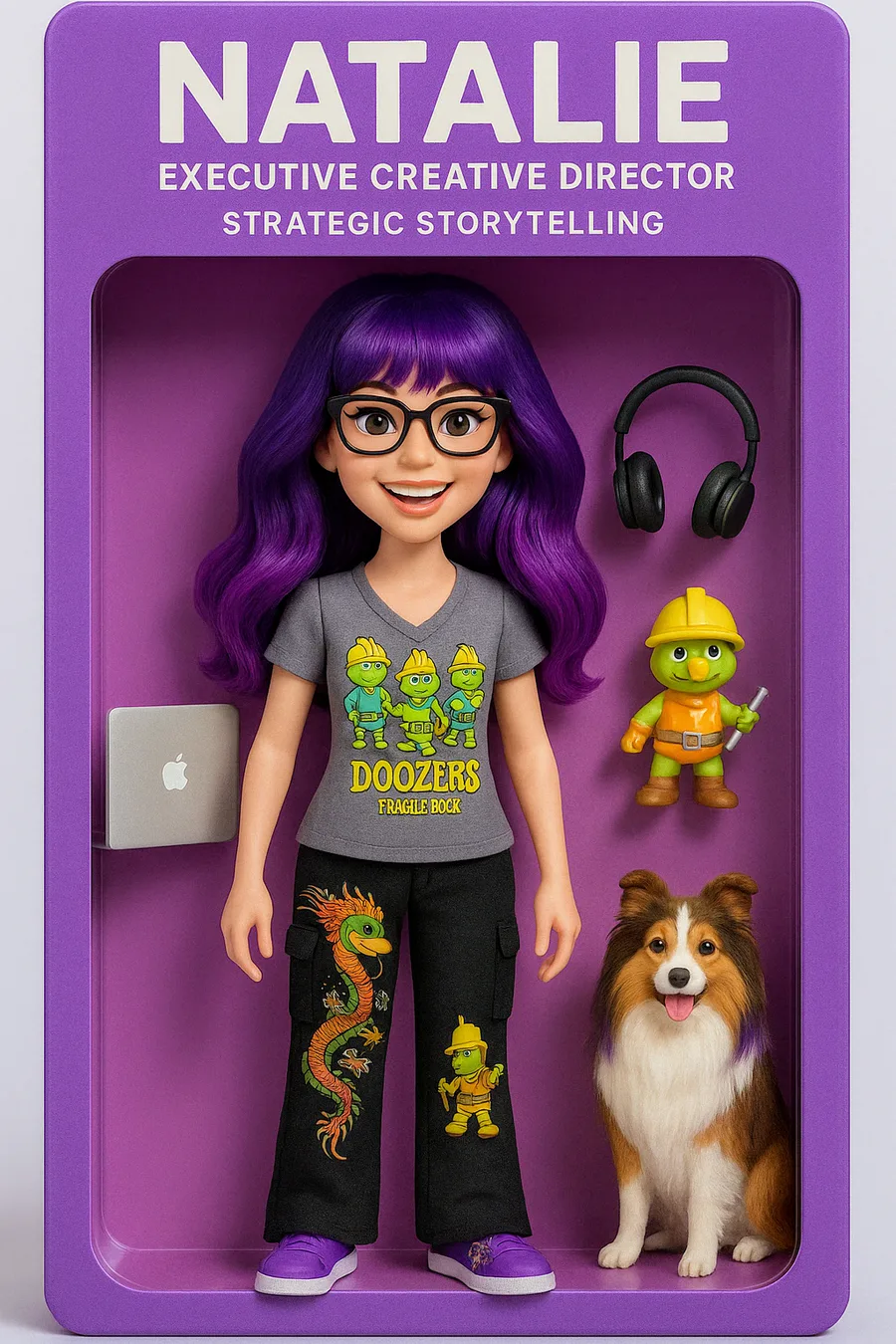
My first AI-generated “doll” image. It started as a creative experiment and became a clue about how quickly the tools were changing.
I came from hard-coding websites in HTML, and I had already watched WYSIWYG tools revolutionize how I built digital work. LLMs accelerated that shift again. A deep understanding of queries and sequencing made prompt writing intuitive, and AI adoption became a no-brainer for me.
But the faster the tools became, the more human taste, creative judgment and a sound framework mattered. Cutting through slop and telling a compelling verbal and visual story became more important, not less. An LLM can generate an answer quickly. That does not mean the answer makes sense, fits the brief or is original enough to stand on its own.
The first space is judgment
Whenever I mentor or teach designers, creatives or developers, I try to slow them down long enough to answer a few practical questions:
- What are we actually trying to do?
- How will we know what matters?
- What does the audience, client or question actually need?
- Which model has the best method for reaching that outcome?
- Is the result testable?
- Who has the final say over whether it works?
The tools can work through documents, text and images and, when connected to search or retrieval systems, scour enormous amounts of information. But the question matters as much as the answer. Ask a poorly formed question and you will usually get a poorly formed result.
For me, that is the first space: human judgment, voice and perspective. The tools can help us reach an answer, but we still have to decide what matters.
Part of answering that means looking backward before looking forward. The projects that prepared me for this moment were not AI projects. They were projects where I had to develop a voice, build a brand, understand a complicated system and make all of those pieces work together.
For Microsoft Azure Percept, I led the visual direction and launch storytelling for an AI and intelligent-edge platform. The challenge was not to make complicated technology look futuristic. It was to work within an established Microsoft brand language and create a launch system, executive presentations and event experiences that made Percept understandable and recognizable as part of the larger AI and cloud family.
For T-Mobile Leadership EDGE, I helped build an enterprise leadership platform from zero to one. That included the name, identity, narrative, curriculum, workshops, executive presentations and the system holding it all together.
For Google Nest, I led the strategy, built the team, directed the UX and UI strategy and developed the roadmap for an authorized-partner program and commerce experience. We connected the brand, customer journey, supply chain and implementation.
Different companies. Different audiences. The same basic job: find the idea, understand the system and develop the brand, experience, story, voice and delivery mechanism, all while leading the teams that will build and maintain it.
My career has always been a Venn diagram of creative and brand work, technology and code, and storytelling and voice. Strategy and client need sit in the middle.
The second space is the technology
That way of working started long before AI. I was writing code in high school, including an early searchable system for car models and inventory, decades before “vibe coding” let people build software through prompts and natural language.
Viet likes to vibe code. I am old school. I still like to build and code and use the LLM to supplement the work, not replace it.
Technology has always played an important role in how I produced creative work, built digital experiences and led teams. I did not use it because it was fashionable. I used it because the work was better with it.
That is how I adopted AI and LLMs as part of my toolkit. The AI, data, tools and applications are the second space. They can move work faster and expand what is possible, but they still need judgment and purpose behind them.
My early experiments led to seminars about fitting AI into real creative and production workflows. In my legal-visuals work, that meant pairing practical applications with prompt discipline, ethical guardrails and the risks of hallucination or visual inaccuracy. That work is now part of my instruction portfolio.
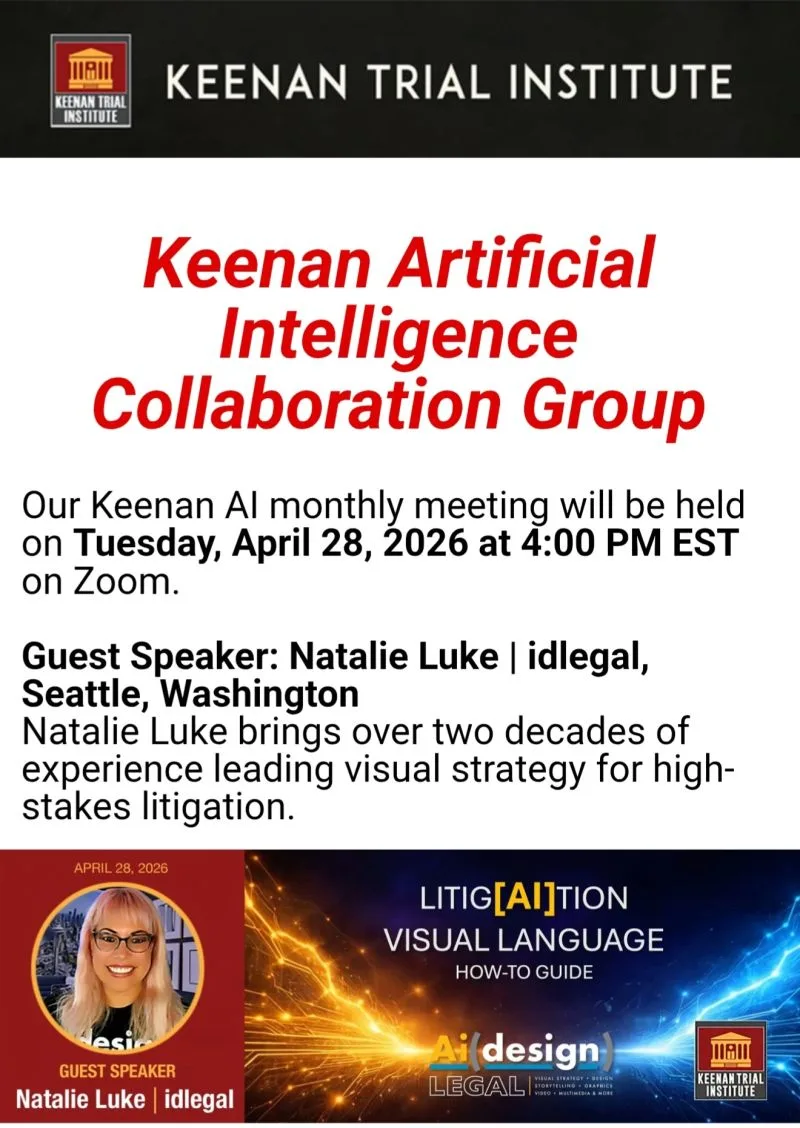
Teaching lawyers how to adopt AI responsibly, including where it can help and where human review cannot be optional.
I have used AI to meet tight deadlines and develop strong visual solutions that might otherwise have taken two or three times as long. But that speed depends on years of knowing what the outcome needs to look like, how to drive the prompt, and how to identify and edit the problem areas quickly.
A tool can be impressive and still be wrong. It can be fast and still create more work. It can produce a beautiful image that has no business appearing in front of a jury.
Transformation is the messy part
Transformation is a word companies love to put in presentations. It looks very clean on a slide.
The actual experience is messier.
In 2020, GeekGirlCon had to turn a sold-out physical convention into its first fully online global event. I led a 38-person multidisciplinary team through that shift. We produced more than 70 hours of programming, established a Twitch partnership and expanded the digital audience by more than 50,000. The story is in my GeekGirlCon portfolio.
The tools mattered. The platform mattered. But the hard part was the same as it is in every transformation: helping people move through uncertainty while maintaining the quality and purpose of the work.
AI adoption will create plenty of that uncertainty. Organizations will buy tools before they know what problem they are solving. Teams will automate workflows nobody bothered to improve first. Leaders will talk about efficiency while employees quietly wonder whether “efficiency” is a polite word for fewer people.
The answer is not a better launch slogan.
The answer is to connect the technology to the business, brand, workflow and people expected to use it. That requires creative judgment, operational discipline and honest communication. Conveniently, that is the kind of work I have been doing for a very long time.
The third space is where they meet
That intersection is where the idea of a third space starts to make sense to me. It is not the human side or the technology side by itself. It is what happens when the two are deliberately brought together around an actual problem.
I have had a place at a lot of tables while companies were making consequential decisions and going through real transformation. I was there as T-Mobile moved from a third-place telecom to a first-place competitor, through Alaska Airlines’ transformation, through Microsoft launches and new technologies, through Starbucks leadership initiatives, and while building programs, brands and experiences from the ground up for companies such as Google.
That experience matters now because it informs what I ask of AI and LLMs. I am not approaching the tools with an abstract question and hoping they tell me what matters. I bring years of context about what businesses, brands, leaders, customers and teams need, which questions should be asked, what good looks like and when an answer simply does not hold up.
Some of the clearest results appear in my work through idlegal, where I help trial teams translate complicated evidence into stories that explain what happened. I develop the narrative, find the facts and create persuasive visual systems for mediation, trial and demands. The work involves large collections of documents, medical records, expert reports and illustrations. LLMs help organize the information and surface facts so I can develop the story.
That work has contributed to more than $215 million in verdicts and settlements, changed lives and helped set state precedents. It has also led to articles and CLE classes.
Why Volume Control and 3rd Space? Why now?
It started over lunch with Viet.
After more than 20 years of collaborating at different companies, we met at HUSHY and started challenging each other over our different perspectives on AI and its usability. Viet was the staunch AI booster. I was the pragmatist saying the tools needed to be more accurate.
Efficiency without judgment reminded me of “The Sorcerer’s Apprentice,” where Mickey’s hubris causes him to lose control of the automated brooms. The first broom is exciting. The hundredth is alarming.
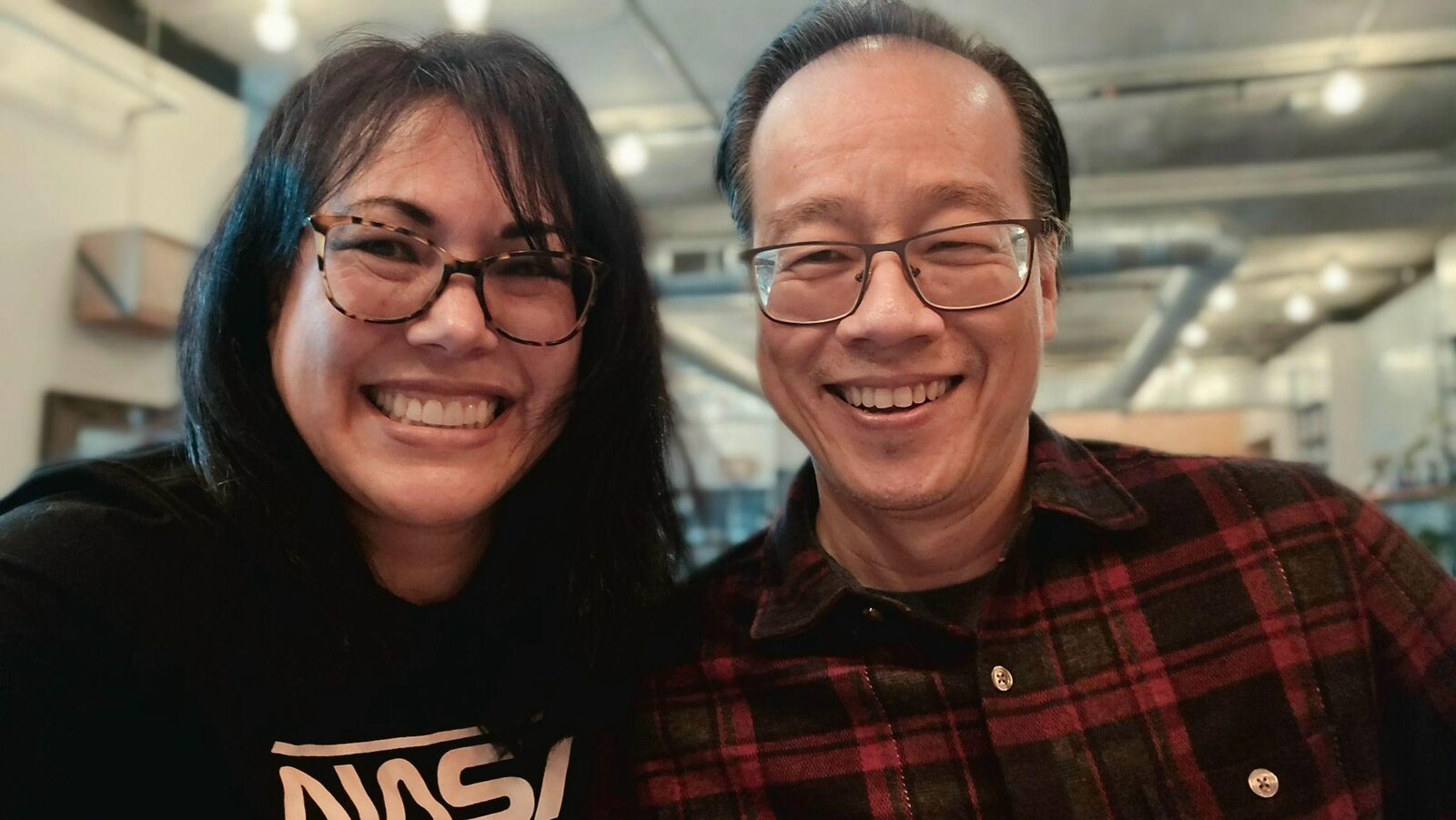
Natalie and Viet at HUSHY, the lunch where the ideas for Volume Control and 3rd Space Project began to come together.
We saw an opening between the hype of total adoption and the fear of total rejection. That is where the concept for Volume Control was born.
Volume Control exists to turn down the volume on the hype and fear and turn up the volume on the useful parts that real people are implementing.
We want to talk with people who are actually using AI, managing the consequences, changing their organizations and learning as they go.
For me, that is the same formula behind 3rd Space Project: human judgment, voice and perspective meeting AI, data, tools and application.
I am not only living with LLMs in our lives. I am living with Volume Control and the studio in our house. The closer you are to the problem, the easier it is to see where the opportunities are greatest and where the weaknesses remain.
The podcast and 3rd Space Project are a work of love. They bring together different voices, hard-earned lessons and practical experience in a period of rapid technological change.
Raw-data-driven LLMs are not what create lasting human engagement and understanding. Personal stories, real-life opinions and lived experience do that. The people behind the experience give it color. The applications show what is possible.
That is the journey that excites me. Come along for the ride, hear the stories and find the pieces of this complicated puzzle with us. You can also find more about me and my projects at natalieluke.com.
Written by

Natalie Luke
Co-founder, 3rd Space Project
Nat runs brand and production at 3rd Space Project and co-hosts Volume Control. Based in Seattle.